


You're buying a rental property and the loan officer asks for two years of tax returns. You know the drill — W-2s, bank statements, a full audit of your personal finances. But what if you didn't need any of that? DSCR loans and conventional mortgages both finance investment properties, but they work in fundamentally different ways. This guide breaks down every difference — income docs, property limits, rates, LLC lending, and closing speed — so you can pick the loan that matches your strategy.
No Income Docs Required
DSCR loans skip the W-2s, tax returns, and pay stubs entirely. Conventional loans demand full income documentation and a debt-to-income ratio under 45%.
No Property Count Limits
Conventional lenders cap you at 10 financed properties. DSCR programs have no limit — finance your 5th, 20th, or 50th rental the same way you financed your first.
Close in LLC Name
Conventional lenders won't close in an LLC — period. DSCR loans let you vest the property in your business entity for liability protection from day one.
Faster Closing Timeline
No income verification means less paperwork and fewer underwriting delays. DSCR loans close in 21-30 days versus 45-60 days for conventional investment property mortgages.
The Core Difference: How You Qualify
Every loan comes down to one question: how does the lender decide you can repay? Conventional loans answer that by looking at you — your personal income, your employment history, your total monthly debt payments. DSCR loans answer it by looking at the property — does the rent cover the mortgage?
With a conventional mortgage, the lender calculates your debt-to-income ratio (DTI). They add up every monthly obligation you have — car payments, student loans, credit cards, existing mortgages — and divide that by your gross monthly income. The maximum DTI for most conventional investment property loans is 45%. If your debts eat up more than that, you don't qualify.
DSCR loans don't care about DTI. The lender calculates the Debt Service Coverage Ratio instead: the property's annual rental income divided by the annual mortgage payment. A DSCR of 1.0x means the rent exactly covers the payment. Most programs require 1.0x to 1.25x minimum. Our No-Ratio DSCR program removes even that requirement.
This matters more than you'd think. A self-employed investor who writes off $80,000 in depreciation across six properties might show $40,000 on their tax return — not enough to qualify conventionally. But each of those properties cash flows. DSCR lending recognizes that reality.
Income Documentation: DSCR vs. Conventional
Here's where the two products split the hardest.
Conventional loans require: Two years of W-2s or 1099s, two years of personal and business tax returns, 30 days of pay stubs (if employed), profit-and-loss statements (if self-employed), a CPA letter in some cases, and bank statements showing income deposits. Every document gets cross-referenced. If your tax return shows different income than your W-2, expect questions. If you had a bad year, expect more questions.
DSCR loans require: A credit report and an appraisal with a rent schedule. That's the core of it. You'll also provide proof of funds for your down payment and reserves, plus entity docs if you're closing in an LLC. No W-2s. No tax returns. No pay stubs. No employment verification at all.
For investors with straightforward W-2 income and 1-2 properties, the conventional documentation isn't a big deal. But the more properties you own, the more complex your finances get — and the harder it becomes to fit into that conventional box. DSCR loans cut through that complexity entirely. You can learn more about the full qualification process in our DSCR loan qualification guide.
How Many Properties Can You Finance?
This is one of the biggest practical differences between the two loan types — and it's the one that catches growing investors off guard.
Fannie Mae and Freddie Mac (the agencies behind conventional mortgages) cap most borrowers at 10 financed properties total. That includes your primary residence. Hit property number 11 and your conventional lender tells you they can't help. Many lenders internally cap even lower — at 4 to 6 financed properties — because the underwriting gets harder and the guidelines tighten with each additional mortgage.
DSCR loans have no property count limit. Property 1 and property 25 go through the same underwriting process. Each deal stands on its own. If the property cash flows, the loan works. This is why portfolio investors who scale past a handful of properties almost always shift to DSCR lending — the conventional pipeline simply runs dry.
Down Payment and LTV Comparison
Both loan types require a significant down payment for investment properties. Neither one is a 3.5%-down FHA situation.
Conventional investment property loans: Typically 25% down (75% LTV) for single-family rentals. Some lenders allow 20% down with strong credit and low DTI, but 25% is the standard. For 2-4 units, expect 25% minimum regardless of credit.
DSCR loans: Standard programs require 20-25% down (75-80% LTV). Borrowers with 720+ credit scores and DSCR above 1.25x can access 80% LTV. Cash-out refinances cap at 70-75% LTV on most programs.
The down payment requirements are similar. Where DSCR loans have an edge: your down payment funds are verified, but the lender doesn't trace them back to income sources. Conventional lenders want to see that your savings came from documented income. DSCR lenders just confirm the funds exist and are yours.
| Feature | DSCR Loan | Conventional Loan |
|---|---|---|
| Income Documentation | None — qualify on property income | Full verification: W-2s, tax returns, pay stubs |
| DTI Required | No DTI calculation | Max 45% debt-to-income ratio |
| Property Limit | Unlimited | 10 financed properties (often 4-6 at many lenders) |
| Down Payment | 20-25% (up to 80% LTV) | 25% typical (75% LTV) |
| Interest Rates | 0.5%-1.5% higher than conventional | Lower base rates |
| LLC / Entity Vesting | Yes — close directly in LLC | No — individual borrowers only |
| Closing Timeline | 21-30 days | 45-60 days |
| Credit Score Minimum | 640 minimum | 620-680 for investment properties |
| Loan Terms | 30-year fixed, ARM, interest-only options | 15 or 30-year fixed, ARM |
What's the Real Cost Difference in Interest Rates?
Let's talk numbers. DSCR loans carry higher interest rates than conventional mortgages — typically 0.5% to 1.5% more. On a $300,000 loan, that's roughly $90 to $270 per month in additional interest.
But the rate alone doesn't tell the full story. Consider what you're getting for that premium. No income docs means your CPA doesn't need to prepare a lender-ready package (that alone can cost $500-$1,500). Faster closings mean you can lock in deals before competing offers. LLC vesting means you don't need to do a post-closing deed transfer and risk triggering a due-on-sale clause. No property count limit means you're not stuck at 10 loans.
Here's a real-world scenario: you find a duplex that cash flows at $600/month after all expenses. A conventional loan saves you $150/month in interest. But the conventional lender needs 60 days to close, and the seller takes a competing cash offer while you're waiting on underwriting. That $150/month savings is worthless if you never close the deal.
The rate matters. But the rate isn't the only cost that matters.
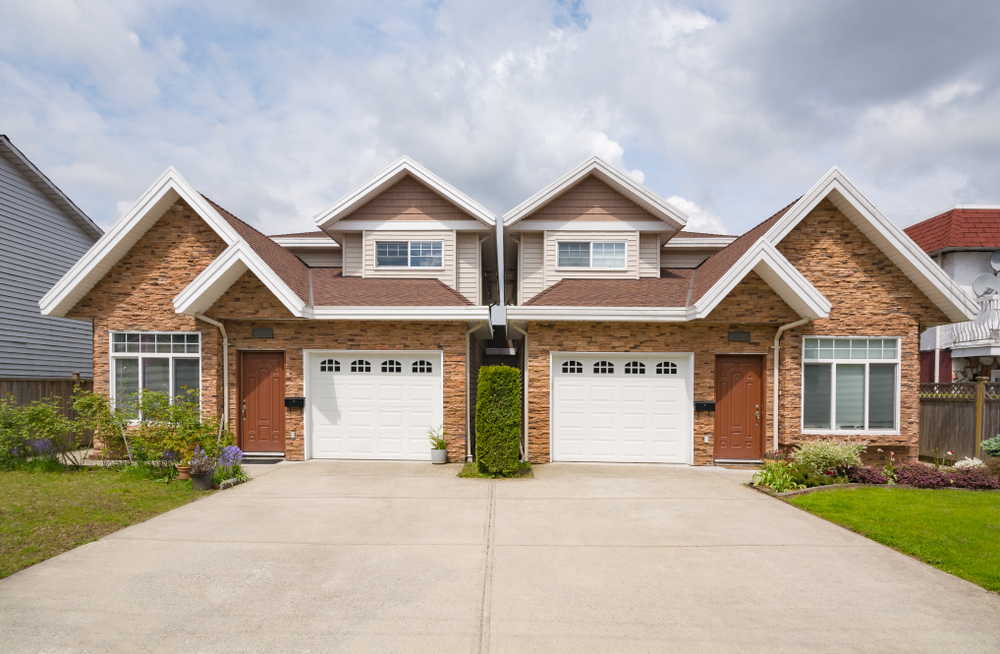
Scaling beyond 10 properties? DSCR loans have no financed property limit.
Can You Close an Investment Property Loan in an LLC?
If you're buying rental properties in your personal name, you're exposed. One lawsuit from a tenant slip-and-fall, and your personal assets are on the table. That's why most serious investors hold properties in LLCs.
Conventional lenders won't close in an LLC. Fannie Mae and Freddie Mac guidelines require an individual borrower on the note and deed. Some investors close conventionally and then deed the property into an LLC after closing — but this technically triggers the due-on-sale clause in the mortgage. Most servicers don't enforce it, but the risk is there.
DSCR loans close directly in the LLC's name. The entity is on the note, the deed, and the title policy from day one. No workaround needed. If you want to understand the full process, our guide on financing rental property in an LLC covers every detail.
Closing Speed and Process
Conventional investment property loans take 45 to 60 days on average. The lender has to verify income, calculate DTI across all your properties, review tax returns, and sometimes request additional documentation mid-process. Every extra property you own adds complexity.
DSCR loans close in 21 to 30 days. The underwriter reviews credit, orders an appraisal with a rent schedule, verifies your down payment funds, and calculates the DSCR. That's the whole process. No income verification means no back-and-forth requesting additional pay stubs or explaining why your 2023 tax return shows less income than 2022.
In competitive markets, that two-week advantage matters. Sellers prefer buyers who can close fast. A 21-day close shows you're serious and reduces the seller's carrying costs.
See Which Loan Fits Your Strategy
Not sure if DSCR or conventional is right for your next deal? Apply online or call to talk through your specific situation with a lending specialist who handles both products.
Which Loan Is Right for Your Situation?
The right loan depends on where you are in your investing career and how your finances are structured. Here's how to think about it.
When Conventional Makes Sense
Conventional loans are a good fit when you have strong W-2 income, fewer than 4-5 financed properties, and you don't need LLC protection. If you're an employee with clean tax returns and a DTI well under 45%, you'll get lower rates and save money over the life of the loan.
Conventional also works if you're patient. You don't mind the 45-60 day timeline, you're comfortable providing full documentation, and you're not competing against cash buyers or quick-close investors.
When DSCR Makes Sense
DSCR loans pull ahead once any of these apply: you own more than 4 financed properties, you're self-employed, your tax returns don't reflect your real income, you want LLC ownership, or you need to close fast.
If you're scaling a portfolio, DSCR is almost always the right tool. Each property qualifies independently. There's no compounding DTI issue where property #7 pushes your ratio over 45%. There's no property count ceiling. And you can use our 30-year fixed DSCR program or a stated income program depending on your deal structure.
Here's a quick rule of thumb: if you've ever been turned down for a conventional investment property loan because of DTI, property count, or documentation issues, DSCR lending solves that problem.
Choose a DSCR Loan When...
- You own 5+ financed properties and conventional lenders are turning you away
- You're self-employed and your tax returns don't reflect your real earning power
- You want to hold rental properties in an LLC for liability protection
- Your DTI ratio exceeds 45% because of existing mortgage debt across your portfolio
- You need to close in 30 days or less to beat competing offers
- You don't want to hand over tax returns, W-2s, and pay stubs to another lender
- You're buying a short-term rental or Airbnb property with projected income
Ready to Get Started?
You've seen the full comparison. If your situation points toward DSCR, the next step takes about 10 minutes. Our 30-year fixed DSCR program offers locked rates with no balloons, no income docs, and closings in as little as 21 days. Available for purchases, rate-and-term refinances, and cash-out transactions across all 48 contiguous states.
If you're not sure which product fits, call and talk it through. Our lending team works with both conventional and DSCR programs and can run the numbers on your specific deal to show you exactly what each option looks like.
Ready to Get Started?
Apply in 10 minutes — no tax returns, no W-2s, no income verification. Get a rate quote based on the property's cash flow, not your personal financials.