
Short-term rentals on Airbnb and VRBO can generate two to three times more income than a traditional long-term lease — and lenders have caught up to that reality. DSCR loans for vacation rentals let you qualify using projected Airbnb income instead of W-2s or tax returns. The lender evaluates the property's earning potential through market data, not your personal financials. This guide covers how STR income gets calculated, what down payment you'll need, how local regulations affect your approval, and exactly what lenders look for when underwriting a short-term rental deal.
Use Projected Airbnb Income
Qualify based on what the property can earn as a short-term rental. Lenders accept AirDNA market data or actual booking history from Airbnb and VRBO to calculate your DSCR ratio.
No Tax Returns Required
Skip the W-2s, 1099s, and personal income documentation. DSCR loans for Airbnb properties qualify on the property's income, not yours. Self-employed investors and LLC owners benefit the most.
Close in LLC Name
Conventional lenders won't close vacation rental loans in an LLC. DSCR programs will. Hold your STR assets in a business entity for liability protection from the start.
Short-Term Rental Specialist
We underwrite STR deals differently than traditional rentals. Our team understands seasonal income patterns, occupancy cycles, and how to structure vacation rental loans that actually close.
How DSCR Loans Work for Short-Term Rentals
A DSCR loan qualifies the borrower based on the property's rental income, not personal earnings. For long-term rentals, that calculation is simple: monthly rent divided by monthly mortgage payment. For short-term rentals, it's the same concept with a different income source.
Instead of a 12-month lease, the lender looks at what the property earns (or can earn) through nightly bookings on platforms like Airbnb, VRBO, or Booking.com. The projected annual gross income gets run through the standard DSCR formula: net operating income divided by annual debt service. Hit a 1.0x ratio or higher, and you qualify.
Here's a quick example. Say you're buying a beachfront condo for $400,000. AirDNA projects gross annual STR income of $60,000. The lender applies a 25% discount, bringing usable income to $45,000. Subtract $8,000 in operating expenses (taxes, insurance, HOA, management), and your NOI is $37,000. On a $300,000 loan (75% LTV) at 7.5% for 30 years, annual debt service is about $25,170. Your DSCR: 1.47x. That's a strong approval.
What makes STR DSCR loans different from standard rental DSCR loans is the income documentation. The lender needs proof the property can actually generate that short-term rental revenue, which brings us to the two main methods.
How Do Lenders Calculate Airbnb Income for a Loan?
Lenders use one of two approaches to verify short-term rental income, depending on whether the property is already operating as an STR or you're buying a new one.
Method 1: Actual booking history. If the property has been listed on Airbnb or VRBO for at least 12 months, the lender can use the actual trailing income. You'll provide platform income statements showing gross bookings, net payouts, and occupancy rates. This is the strongest documentation because it's real, verified revenue. Some lenders accept as few as 6 months of history and annualize it.
Method 2: Third-party market projections. For new purchases or properties that haven't been listed yet, lenders rely on market data providers like AirDNA. An AirDNA report pulls comparable STR listings in the area and projects annual revenue based on local occupancy rates, average daily rates (ADR), and seasonal demand. Most lenders discount projected income by 25% as a conservative buffer against actual performance falling short.
Some lenders use a hybrid approach. They'll pull both the AirDNA projection and the Form 1007 long-term rent estimate from the appraisal, then use whichever is lower. Others will accept the STR projection at face value (with the discount applied) if the market data supports it.
The takeaway: if your property is in a proven STR market with strong comps, the income documentation isn't a hurdle. It's actually an advantage, because STR income often outpaces long-term rent by 50% to 200%, which gives you a much stronger DSCR ratio.
Down Payment and LTV for Vacation Rental Loans
Short-term rental DSCR loans typically require 20% to 25% down. That's 75-80% loan-to-value, similar to standard investment property DSCR loans. Some lenders add a 5% LTV hit specifically for STR properties, meaning you might max out at 75% LTV instead of 80%.
Why the extra cushion? STR income is more volatile than a signed 12-month lease. A long-term rental produces the same rent every month. A vacation rental might gross $8,000 in July and $2,000 in January. Lenders account for that variability by requiring more equity.
Here's how the numbers break down on a $500,000 vacation rental purchase:
At 80% LTV: $100,000 down payment, $400,000 loan amount. Available to borrowers with 720+ credit and a DSCR above 1.25x in markets with strong year-round demand.
At 75% LTV: $125,000 down payment, $375,000 loan amount. The standard tier for most STR purchases. Lower monthly payment and stronger DSCR as a bonus.
Down payment funds can come from personal savings, business accounts, proceeds from selling another property, or a gift. The lender verifies the source but won't question how you earned the money. You'll also need 6 months of PITIA reserves (principal, interest, taxes, insurance, and HOA) — that's about $15,000 to $20,000 on a $400,000 loan, sitting in a bank account after closing.
Do STR Regulations Affect Your Financing?
Yes, and this is where deals fall apart for unprepared buyers. Lenders won't fund a short-term rental loan on a property where STR operations aren't legally permitted. If the city or county bans vacation rentals, or caps permits and the cap is full, the lender treats the property as a long-term rental only. Your STR income projections become irrelevant.
Before you put a property under contract, check three things:
Municipal STR ordinances. Does the city or county allow short-term rentals? Some require a permit or license. Others ban them outright in certain zones. A few have moratoriums on new STR permits. Call the local planning or zoning department directly — don't rely on what's listed online, because regulations change fast.
HOA restrictions. Even if the city allows STRs, the homeowners association might not. Condo associations are especially strict. Read the CC&Rs (covenants, conditions, and restrictions) before you make an offer. A single clause prohibiting rentals under 30 days kills the deal.
State-level rules. Some states have preempted local STR bans, while others have added their own licensing requirements. Know the full regulatory stack: state, county, city, and HOA.
When you apply for a short-term rental mortgage, the lender will verify that the property is in an STR-friendly jurisdiction. If you can show an active STR permit or license, that's the fastest path to approval.

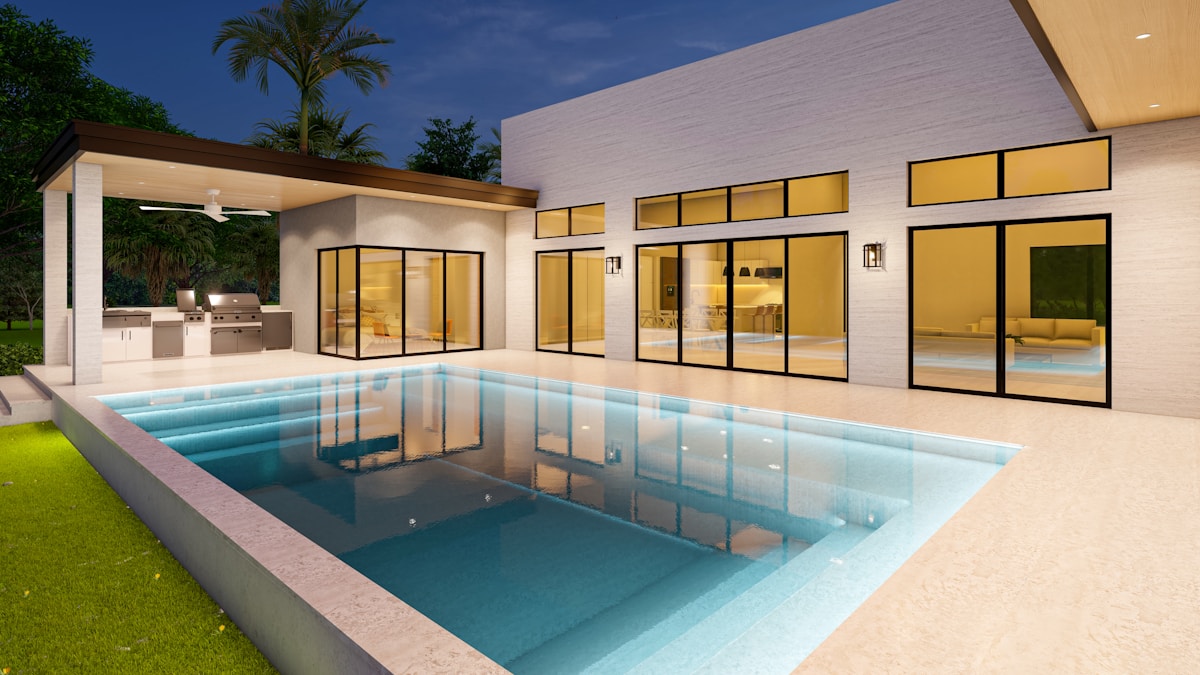
Vacation rentals in high-demand markets can generate 2-3x more income than long-term leases.
What Property Types Work for Short-Term Rental Loans?
DSCR lenders will finance a range of property types as short-term rentals, but the property needs to make sense for the STR market. Here's what qualifies:
Single-family homes: The most popular STR property type. Beach houses, mountain cabins, lakefront homes, and suburban houses near attractions or business districts all work. Lenders want to see the property is in a market where travelers actually book nightly stays.
Condos and townhomes: Eligible if the HOA allows short-term rentals. Resort condos in vacation markets (Destin, Gatlinburg, Scottsdale) are common. The lender checks the condo project's warrantability and the HOA's STR policy as part of underwriting.
2-4 unit properties: Duplexes and triplexes can be especially profitable as STRs. You might list one unit on Airbnb and rent the other long-term. The lender evaluates each unit's income stream separately and combines them for the DSCR calculation.
Unique properties: A-frames, tiny homes, treehouses, and converted barns are hot on Airbnb, but most DSCR lenders stick to standard construction. If the property doesn't appraise as a traditional residential dwelling, you may need a niche lender or a higher down payment.
Finance Your Vacation Rental Investment
DSCR loans for Airbnb and VRBO properties. Qualify on projected STR income, close in an LLC, no tax returns required. Apply online or talk to our STR lending team.
Can You Convert a Long-Term Rental to Airbnb and Refinance?
Absolutely. This is one of the most common STR financing strategies. You own a property that's been rented long-term at $1,800/month, but comparable Airbnb listings in the area gross $4,500/month. Converting to an STR and refinancing lets you pull the increased income into a better loan.
Here's how it works. You terminate the long-term lease (following local notice requirements), furnish the property, list it on Airbnb, and build 3-6 months of booking history. Then you refinance with a DSCR loan using the actual STR income as your qualifying revenue. The higher income produces a stronger DSCR, which may qualify you for better rates or a cash-out refinance to fund your next acquisition.
Some lenders don't require booking history at all. If you're converting a property in a proven STR market, they'll accept the AirDNA projected income for the refinance. That means you can refinance as soon as the property is listed, without waiting months to build a track record.
If you want to keep your documentation minimal, our No-Ratio DSCR program removes the income ratio requirement entirely. You qualify on credit score, LTV, and property type alone.
Insurance Requirements for STR Properties
Standard landlord insurance policies don't cover short-term rentals. If a guest slips on the stairs and you've got a long-term rental policy, your claim gets denied. STR properties need specialized coverage.
Short-term rental insurance: Companies like Proper, CBIZ, and Safely offer policies designed specifically for Airbnb and VRBO properties. Coverage includes liability for guest injuries, property damage from guests, loss of rental income, and contents/furnishings. Expect to pay 20-40% more than a standard landlord policy.
Lender requirements: The DSCR lender requires a hazard insurance policy listing them as the mortgagee. Most lenders also require the policy to specifically cover short-term rental use. If your policy has a "tenant type" exclusion for stays under 30 days, the lender will flag it during underwriting.
Airbnb Host Protection: Airbnb's built-in Host Protection Insurance provides $1 million in liability coverage per occurrence. But lenders don't accept platform insurance as a substitute for a standalone policy. You need both: your own STR insurance policy and the platform's supplemental coverage.
Budget $2,500 to $5,000 per year for STR insurance on a typical single-family vacation rental. Factor this into your DSCR calculation — it's a bigger expense than long-term rental insurance, and it directly impacts your net operating income.
AirDNA and Market Data: What Lenders Look For
When a lender orders an AirDNA report (or you provide one), they're checking several specific data points:
Revenue projection: The estimated annual gross income for the property based on comparable STR listings within a defined radius. Lenders typically use the 25th to 50th percentile estimate, not the optimistic top-end number.
Occupancy rate: What percentage of available nights are booked in the area? A market averaging 65-75% occupancy signals strong demand. Below 50% raises questions about income sustainability.
Average daily rate (ADR): The average nightly price for comparable listings. Lenders compare this against your projected pricing to make sure your assumptions are realistic.
Seasonality pattern: Markets with extreme seasonality (ski towns, beach communities) get more scrutiny. A property that earns 70% of its annual income in three months creates concentration risk. Lenders may apply a larger discount to projected income in highly seasonal markets.
You can pull your own AirDNA report before applying. It costs around $20-40 per property and gives you the same data the lender will see. If the numbers support a 1.25x+ DSCR, you're in strong shape. If they're borderline, you'll know to either adjust your purchase price, increase your down payment, or consider a standard DSCR loan using long-term rent projections instead.
Tips for Maximizing Your STR Loan Approval
The fundamentals are the same as any DSCR loan — strong credit, solid down payment, and a property that cash flows. But STR deals have a few extra levers you can pull.
Pick a proven STR market. Lenders are more comfortable with properties in established vacation rental markets: coastal towns, mountain resort areas, cities with year-round tourism. A cabin outside Gatlinburg has more STR income comps than a suburban house in a market with no short-term rental history.
Get your AirDNA report early. Pull it before you make an offer. If the projected income doesn't support at least a 1.0x DSCR at your target purchase price, either negotiate the price down or move on. Don't find out during underwriting.
Secure your STR permit before applying. If the municipality requires a license or permit, get it in hand. Showing the lender an active permit removes regulatory risk from the equation and speeds up approval.
Budget for furnishing costs. Vacation rentals need to be guest-ready. Furniture, linens, kitchen supplies, smart locks, and professional photos can run $15,000 to $30,000 for a typical 3-bedroom. These costs come out of pocket and aren't included in the loan. Make sure your reserves account for them.
Consider a 30-year fixed rate over shorter terms. Locking in a fixed rate for 30 years keeps your debt service constant even as nightly rates and occupancy fluctuate. Your DSCR only improves as STR revenue grows over time, and your payment never changes.
Long-Term Rental vs. Short-Term Rental: Financing Differences
Both property types use DSCR loans, but the underwriting has some key differences:
Income documentation: Long-term rentals use a signed lease or the appraiser's Form 1007 market rent estimate. STRs use AirDNA projections or actual booking history. The STR income is typically higher, but it comes with a lender discount (usually 25%).
Down payment: Long-term rentals may qualify for 80% LTV with a 720+ credit score. STR properties may cap at 75% LTV due to income volatility, meaning 25% down instead of 20%.
Insurance costs: STR insurance runs 20-40% more than standard landlord policies. This higher expense reduces your NOI and can impact the DSCR calculation.
Regulatory risk: Long-term rentals face almost no regulatory hurdles. STRs require permit verification, HOA clearance, and zoning confirmation. If regulations change after closing, your income model could be affected.
Cash flow profile: Long-term rentals produce consistent monthly income. STR income is lumpy — strong months and weak months depending on season and demand. Lenders account for this, but you should too. Keep 6+ months of reserves to cover slow periods.
For a deeper look at running the cash flow numbers on any rental property, our guide on analyzing rental property cash flow covers every metric and formula you need.
Airbnb Loan Readiness Checklist
- Local STR permits and zoning verified — confirm the municipality allows short-term rentals
- HOA CC&Rs reviewed for any short-term rental restrictions or minimum stay requirements
- AirDNA market report pulled showing projected income, occupancy rate, and ADR
- DSCR calculated at 1.0x or higher using discounted STR income projections
- Short-term rental insurance quotes obtained from STR-specific carriers
- Down payment of 20-25% sourced and documented in bank statements
- 6 months of PITIA reserves available after closing and furnishing costs
- Credit score at 640+ (720+ for best rates and maximum LTV)
- LLC or entity documents ready if closing in a business name
Ready to Finance Your Airbnb Property?
DSCR loans for short-term rentals with no income docs, projected STR income qualification, and closings in as few as 21 days. Apply online or call our vacation rental lending team to talk through your deal.