
Buying your first rental property is one of the best financial moves you can make — but the financing part trips up most people before they even make an offer. You don't need years of landlord experience or a stack of tax returns. DSCR loans qualify you based on what the property earns, not what you earn. This guide breaks down every step from setting your budget to closing day, with real numbers and the exact loan programs available to first-time investment property buyers.
No Experience Required
DSCR loans don't care how many properties you've owned. First-time investors qualify the same way as someone with a 50-unit portfolio — based on the property's rental income.
No Tax Returns Needed
Skip the W-2s and income verification. DSCR lenders qualify you based on the property's cash flow, not your personal tax situation. Self-employed borrowers love this.
20% Down Payment
Standard investment property down payment starts at 20% — that's $40,000 on a $200,000 property. Some programs go as low as 15% with strong credit scores above 720.
Close in 21-30 Days
No income verification means less paperwork and faster underwriting. Most DSCR loans close in 21 to 30 days — fast enough to compete with cash buyers on good deals.
Step 1: Figure Out Your Budget
Before you start browsing Zillow, get clear on the numbers. Your total upfront cost isn't just the down payment — it includes closing costs, reserves, and a small buffer for unexpected repairs after move-in.
Let's use a $200,000 property as an example. Here's what you'll need:
Down payment (20%): $40,000
Closing costs (2-4%): $4,000 – $8,000
Cash reserves (3-6 months of PITIA): $4,500 – $9,000
Total out-of-pocket: roughly $48,500 – $57,000
The reserves requirement catches first-time buyers off guard. Lenders want to see that you have 3 to 6 months of mortgage payments sitting in the bank after closing. That money doesn't get spent — it just has to exist. If your monthly PITIA (principal, interest, taxes, insurance, association dues) is $1,500, you'll need $4,500 to $9,000 in reserves.
If $200,000 feels like a stretch, consider markets where you can find cash-flowing rentals for $120,000 to $160,000. The Midwest and parts of the Southeast have plenty of single-family homes in that range. Your total out-of-pocket at $150,000 drops to about $36,000 to $43,000.
Step 2: Choose the Right Property Type
Your first rental should be simple to manage, easy to finance, and straightforward to sell if you need to exit. That narrows the field fast.
Single-family homes are the most common starting point. One tenant, one lease, one roof. They're the easiest to buy, the easiest to get financed with a residential rental property loan, and they appreciate well in most markets. Downside: one vacancy means 100% income loss until you fill it.
Duplexes are the sweet spot for a lot of first-timers. Two units means diversified income — if one tenant moves out, the other still covers part of the mortgage. You can also house-hack by living in one unit and renting the other. Duplexes still qualify for standard residential financing up to 4 units.
Small multifamily (3-4 units) generates stronger cash flow but requires more management. You're dealing with multiple tenants, shared systems, and higher maintenance costs. It's doable as a first property, but be honest about how much time you want to spend.
Skip anything that needs major rehab on your first deal. A $30,000 renovation budget on top of your down payment and closing costs adds significant risk. Buy something rent-ready or close to it.

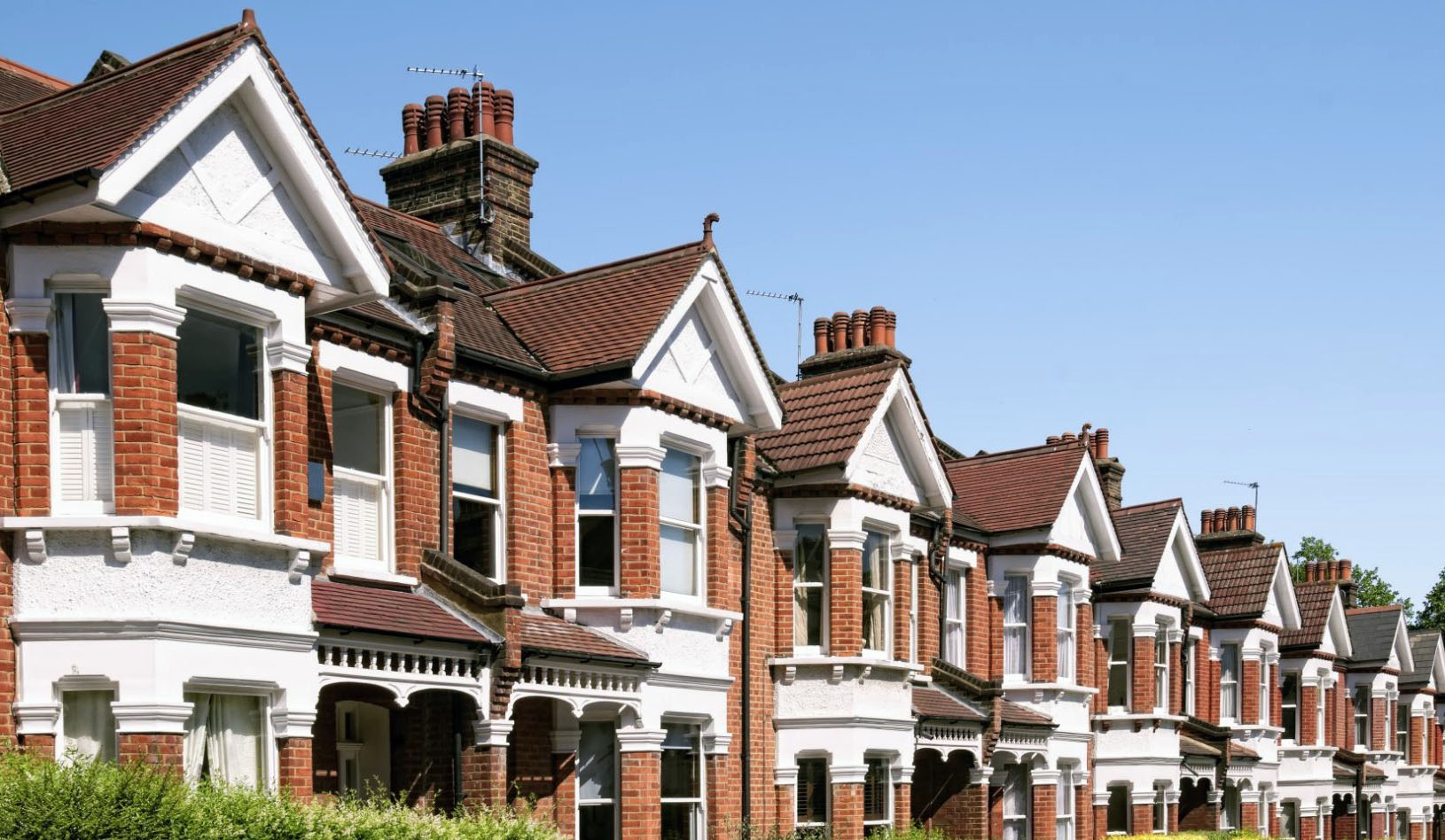
Single-family homes in stable suburban neighborhoods are the most popular entry point for first-time rental investors.
How Do First-Time Investors Qualify for Financing?
This is where most people assume they'll hit a wall. They think lenders require years of landlording experience or a portfolio of existing properties. That's not how DSCR loans work.
DSCR stands for Debt Service Coverage Ratio. The lender divides the property's expected rental income by the total mortgage payment (principal, interest, taxes, insurance). If that ratio is 1.0x or above, the property's income covers the debt. Most programs want to see at least a 1.0x DSCR, and many prefer 1.25x.
Here's a quick example. You're buying a $200,000 rental with 20% down. The monthly mortgage payment including taxes and insurance is $1,350. Market rent for the property is $1,700. Your DSCR is $1,700 / $1,350 = 1.26x. That qualifies under most programs.
The big advantage: no W-2s, no tax returns, no employment verification. The lender doesn't care if you're a W-2 employee, self-employed, or retired. If the property cash-flows, you qualify. You can learn more about the full qualification process in our step-by-step DSCR qualification guide.
Step 3: Get Pre-Qualified for a Loan
Don't wait until you find a property to talk to a lender. Getting pre-qualified first tells you exactly how much you can borrow, what your rate looks like, and whether there are any credit issues to fix before you make an offer.
For a DSCR pre-qualification, you'll typically need:
Credit report authorization — the lender pulls your score. Minimum 640 for most programs, though 720+ gets you better rates and terms.
Proof of funds — bank statements showing you have the down payment, closing costs, and reserves available.
Property details — once you have a target property, the lender will look at comparable rental rates, the appraisal, and the DSCR calculation.
The pre-qualification process takes a day or two. Once you have a pre-qual letter, sellers and their agents take your offers more seriously. In competitive markets, it can be the difference between winning and losing a deal.
Get Pre-Qualified for Your First Investment Property
Find out how much rental property you can afford with no tax returns and no income verification. Pre-qualification takes minutes, not weeks.
Step 4: Find and Analyze Your Deal
Once you know your budget and have a pre-qualification, it's time to find the right property. Focus on areas with strong rental demand — look for low vacancy rates, steady population growth, and rents that clearly cover the mortgage payment.
Run the numbers on every property before you make an offer. You need to know three things: monthly cash flow, cash-on-cash return, and DSCR ratio. If you haven't done this before, our cash flow analysis guide walks through the full calculation step by step.
A quick rule of thumb for first-time investors: target properties where your net monthly cash flow (rent minus all expenses) is at least $150 to $300 per unit. That gives you enough margin to absorb a vacancy or unexpected repair without dipping into your personal savings.
Talk to local property managers before you buy. They'll tell you what realistic rents look like in the neighborhood, how long units sit vacant, and which streets or blocks to avoid. That ten-minute phone call can save you from a $200,000 mistake.
DSCR Loan Calculator
Plug in your numbers and see if your target property qualifies for DSCR financing. Calculate your ratio, estimated payment, and cash flow in minutes.
Use the DSCR Calculator →What Credit Score Do You Need for Your First Rental Property Loan?
Most DSCR programs require a minimum 640 credit score. That's lower than what many people expect — conventional investment property loans through banks often want 700 or higher.
Your credit score also affects your interest rate and terms. Here's how it generally breaks down:
640-699: You'll qualify, but expect rates on the higher end of the range. Some programs may require 25% down instead of 20%.
700-739: Solid middle ground. Standard rates, 20% down, full access to most DSCR programs.
740+: Best available rates and terms. Some lenders offer reduced origination fees or higher leverage at this tier.
If your score is below 640, don't wait forever to buy. Talk to a loan officer about what it would take to bump your score — sometimes paying down a credit card or removing an error gets you there in 30 to 60 days. You can lock in a 30-year fixed rate DSCR loan and refinance later if rates improve.
Step 5: Make an Offer and Close
Once you've found a property that hits your cash flow numbers, move fast. Good rental deals don't sit on the market long.
Your offer should include your pre-qualification letter and proof of funds. Keep contingencies reasonable — an inspection contingency and financing contingency are standard. Appraisal is typically handled by the lender.
After your offer is accepted, the closing timeline looks like this:
Days 1-5: Loan application submitted, appraisal ordered, title search initiated.
Days 5-15: Appraisal completed, underwriting reviews the file, insurance bound.
Days 15-25: Clear to close issued, closing documents prepared, final walkthrough.
Days 25-30: Closing day — sign documents, wire funds, get keys.
DSCR loans typically close faster than conventional investment property mortgages because there's no income verification or employment check. Twenty-one to thirty days from application to funding is standard.
Investment Property Mortgage Calculator
Estimate your monthly payment, total interest, and amortization schedule for any rental property purchase price and down payment combination.
Calculate Your Payment →Step 6: Set Up Property Management
You have two options: manage it yourself or hire a property manager. Most first-time investors start by self-managing to save money, and that's fine if you live near the property and have the time.
Professional property management typically costs 8-10% of monthly rent. On a $1,700/month rental, that's $136 to $170 per month. Sounds like a lot until you factor in the time you'll spend handling maintenance calls, coordinating repairs, screening tenants, and chasing late rent.
If you're buying out of state — which many first-time investors do to find better cash flow — hire a property manager from day one. Self-managing a rental 1,000 miles away is a recipe for stress and bad decisions.
Either way, set up your systems before the first tenant moves in: a separate bank account for rental income and expenses, a maintenance request process, and a written lease that complies with your state's landlord-tenant laws.
How Much Cash Flow Should You Expect From Your First Rental?
Let's run through a realistic scenario. You buy a single-family rental for $200,000 with 20% down on a 30-year fixed rate program. Your loan amount is $160,000.
Monthly rent: $1,700
Mortgage payment (P&I): $1,050
Property taxes: $200
Insurance: $100
Maintenance reserve (5%): $85
Vacancy reserve (5%): $85
Total expenses: $1,520
Net cash flow: $180/month ($2,160/year)
That $180 per month might not sound like much, but it's $2,160 per year in passive income on a $48,000 investment — roughly a 4.5% cash-on-cash return. Plus, your tenant is paying down your mortgage, the property is likely appreciating, and you're building equity every month. The total return picture is much stronger than the cash flow number alone.
Don't chase huge cash flow numbers on your first deal. A property that reliably produces $150 to $300 per month with minimal headaches is a great starting point. The goal is to get your first one under your belt, learn the process, and build toward your second.
First-Time Investor Readiness Checklist
- Credit score at 640 or above (720+ for best rates)
- 20-25% down payment saved and verified in bank account
- 2-4% closing costs budgeted on top of down payment
- 3-6 months of mortgage payment reserves in the bank
- Target market identified with strong rental demand
- Property type selected (SFR, duplex, or small multi)
- Pre-qualification letter from a DSCR lender
- Property management plan in place (self-manage or hire out)
Ready to Buy Your First Rental?
You don't need landlording experience or two years of tax returns. Apply for a DSCR loan and get pre-qualified based on the property's income — not yours.