

DSCR loans let you qualify based on what the property earns, not what you earn. No W-2s, no tax returns, no employment verification. The lender looks at one number: does the rental income cover the mortgage payment? If it does, you're most of the way there. This guide walks through every qualification requirement step by step — credit score thresholds, down payment amounts, how the DSCR ratio actually gets calculated, and what documents you'll need at closing.
No Income Docs Required
Skip the W-2s, tax returns, and employment verification. DSCR loans qualify you based on the property's rental income — not your personal earnings or DTI ratio.
Close in LLC or Entity Name
Conventional lenders won't close in an LLC. DSCR loans will. Keep your investment properties in your business entity for liability protection from day one.
30-Year Fixed Rate Terms
Lock in a fixed rate for the full 30-year term. No adjustable-rate surprises, no balloon payments. Your mortgage payment stays the same while rents increase over time.
Fast Closings: 21-30 Days
DSCR loans close faster than conventional mortgages because there's no income verification process. Most deals close in 21 to 30 days from application to funding.
What Is a DSCR Loan?
A DSCR loan is an investment property mortgage where the lender qualifies you based on the rental property's cash flow instead of your personal income. DSCR stands for Debt Service Coverage Ratio — it measures whether the property generates enough rental income to cover the monthly mortgage payment, including principal, interest, taxes, insurance, and HOA fees.
Here's why that matters: conventional lenders want two years of W-2s, tax returns, and a personal debt-to-income ratio under 45%. If you're self-employed, own multiple LLCs, or write off heavy depreciation, your tax returns don't show your real earning power. DSCR loans ignore all of that. The property pays the mortgage, so the property qualifies for the loan.
These loans are available for single-family rentals, 2-4 unit properties, condos, townhomes, and 5+ unit apartment buildings. You can use them for purchases, rate-and-term refinances, or cash-out refinances to pull equity from properties you already own.
How Do Lenders Calculate DSCR?
The formula is straightforward:
DSCR = Annual Net Operating Income / Annual Debt Service
Net operating income (NOI) is your gross rental income minus operating expenses — property taxes, insurance, HOA dues, and a vacancy factor. Debt service is your total annual mortgage payment (principal + interest).
Let's walk through a real example. Say you're buying a rental property for $300,000:
Income side: Monthly rent of $2,400, so gross annual rent is $28,800. Subtract a 5% vacancy factor ($1,440), and your effective gross income is $27,360.
Expense side: Annual property taxes of $3,600, insurance at $1,800, no HOA. Total operating expenses: $5,400. That gives you an NOI of $21,960.
Debt service: On a $240,000 loan (80% LTV) at 7.5% over 30 years, your annual mortgage payment is roughly $20,136.
DSCR = $21,960 / $20,136 = 1.09x
A 1.09x DSCR means the property produces 9% more income than needed to cover the mortgage. Most lenders require 1.0x minimum, and our standard programs start at 1.0x. A ratio above 1.25x qualifies you for the best rates. If your property falls below 1.0x, our No-Ratio DSCR program removes the DSCR requirement entirely.
What Credit Score Do You Need for a DSCR Loan?
Credit score is one of the biggest factors in your DSCR loan terms. Here's how the tiers break down:
720+ credit score: Best available rates and maximum leverage. You'll qualify for up to 80% LTV on purchases and have access to the full range of loan products, including cash-out refinances up to 75% LTV.
680-719 credit score: Slightly higher rates, but you're still in strong territory. Most programs remain available with minor pricing adjustments — typically 0.25% to 0.50% higher than the 720+ tier.
640-679 credit score: This is the minimum range for DSCR programs. You may see LTV caps of 75% instead of 80%, and rates will carry an additional premium. Still a viable path to financing.
One thing worth knowing: DSCR lenders pull a tri-merge credit report and use the middle score, same as any mortgage. If your scores are 680, 695, and 710, you're a 695. Cleaning up any errors or paying down revolving balances before you apply can make a meaningful difference in your rate.
Down Payment and LTV Requirements
DSCR loans typically require more skin in the game than a primary residence mortgage. The standard down payment is 20% to 25%, which translates to 75-80% loan-to-value.
Purchase transactions: Most programs allow up to 80% LTV for borrowers with 720+ credit and a DSCR above 1.25x. Lower credit scores or thinner DSCR ratios may cap you at 75% LTV. Some programs offer up to 85% LTV for strong profiles, but those come with higher rates.
Rate-and-term refinances: Similar to purchases — up to 80% LTV on the appraised value. You'll need to have owned the property for at least six months at most lenders (the "seasoning" requirement).
Cash-out refinances: Typically capped at 70-75% LTV. If you bought a property at a discount, rehabbed it, and it appraises higher, a cash-out refi lets you pull that equity and redeploy it into your next deal. This is the core of the BRRRR strategy (Buy, Rehab, Rent, Refinance, Repeat).
Down payment funds can come from personal savings, business accounts, a gift from a family member, or equity from another property sale. Lenders will verify the source, but they won't ask where the income came from to build those savings.

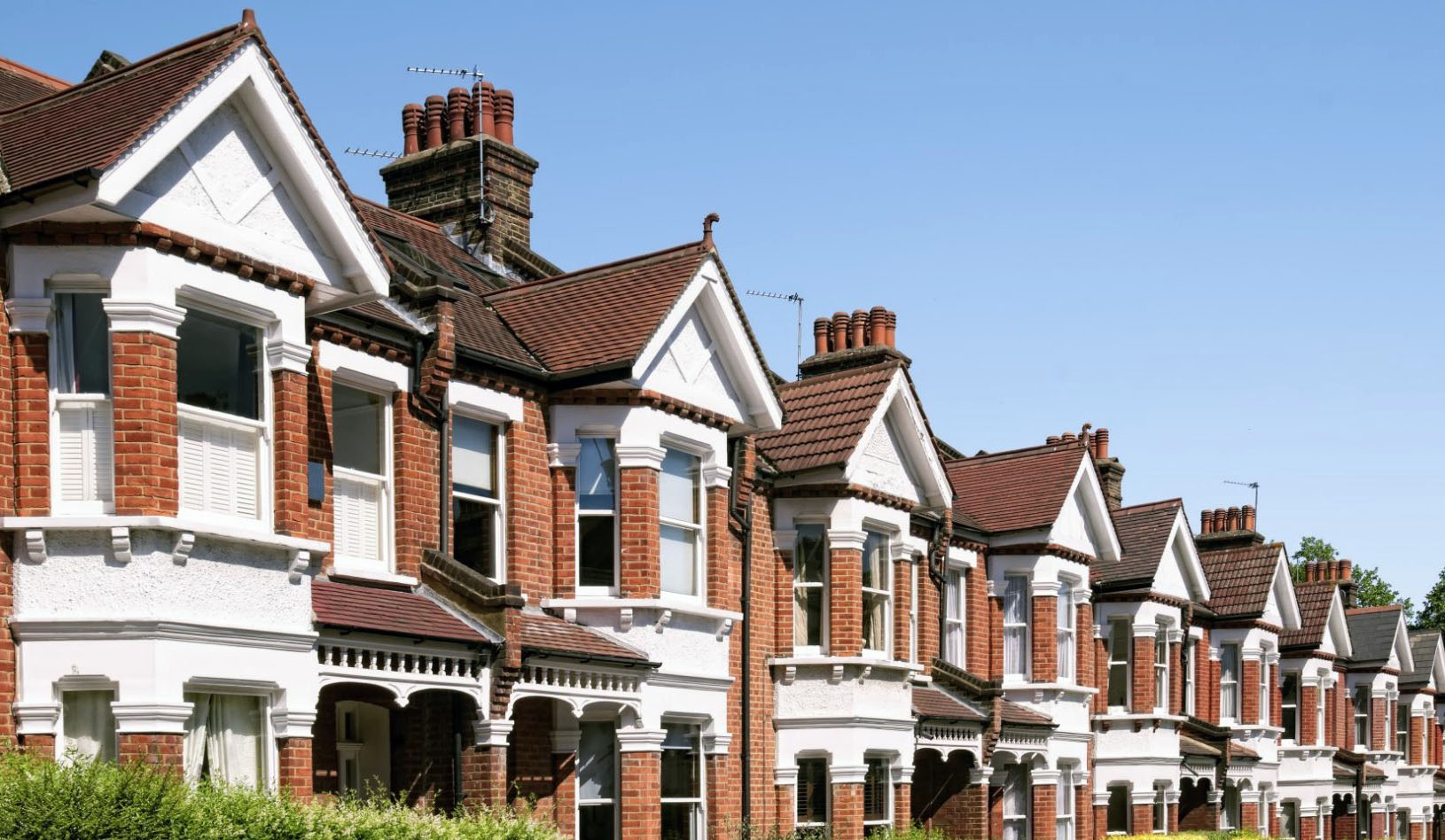
Single-family rentals, duplexes, and small multifamily all qualify for DSCR financing.
What Property Types Qualify for a DSCR Loan?
DSCR loans cover a wide range of investment property types. The key requirement is that the property must be non-owner-occupied — you can't use a DSCR loan for your primary residence.
Single-family rentals (SFR): The most common DSCR loan property type. Houses, townhomes, and detached single-family homes rented to long-term tenants.
2-4 unit properties: Duplexes, triplexes, and fourplexes. These often produce stronger DSCR ratios because multiple units generate income against one mortgage payment. A duplex renting at $1,200 per side gives you $2,400/month against a single debt service obligation.
Condos and warrantable condominiums: Eligible as long as the condo project meets basic lender guidelines (owner-occupancy ratio, HOA financial health, no litigation). Non-warrantable condos may qualify under specialized programs.
5+ unit apartment buildings: Multifamily properties with five or more units typically fall under commercial DSCR programs. Different underwriting, but the same core principle — the building's income covers the debt.
Short-term rentals (Airbnb/VRBO): Many DSCR programs accept projected short-term rental income based on a market analysis from platforms like AirDNA or a 1007 rent schedule. Short-term rentals can qualify with higher DSCR ratios due to their elevated income potential. Check out our short-term rental mortgage program for details.
Mixed-use properties: Properties with a residential component (like apartments above a ground-floor retail space) may qualify if the residential portion generates the majority of the income.
See If You Qualify in Minutes
Our DSCR loan programs start at 1.0x coverage ratio with no income docs required. Apply online or call to discuss your deal with a lending specialist.
Can You Get a DSCR Loan as a First-Time Investor?
Yes. Most DSCR programs don't require prior landlord or investing experience. You don't need to show a track record of managing rental properties or a history of real estate transactions. The lender's focus is on the property's income potential, not your resume.
That said, first-time investors should expect slightly more conservative terms. Some lenders reserve the highest leverage options (80%+ LTV) for borrowers who own at least one or two investment properties already. As a first-time buyer, you might be capped at 75% LTV — which just means you'll bring 25% down instead of 20%.
The fastest way to get started is with a single-family rental in a strong rental market. Find a property where the market rent clearly covers the projected mortgage payment, run the numbers through a DSCR calculator, and apply with a 640+ credit score and 25% down. That's a straightforward approval for most programs.
What Documents Do You Need for a DSCR Loan?
This is where DSCR loans differ most from conventional mortgages. The documentation list is short because the lender isn't underwriting your personal income. Here's what you'll typically need:
For the borrower:
- Government-issued photo ID
- Credit authorization (the lender pulls your report directly)
- Entity documents if closing in an LLC — articles of organization, operating agreement, and EIN letter
- Bank statements or proof of funds showing your down payment and reserves (usually 2-3 months of statements)
For the property:
- Signed purchase contract (for acquisitions)
- Appraisal — the lender orders this; it includes a comparable rent schedule (Form 1007 or 1025)
- Current lease agreement if the property already has a tenant
- Insurance binder showing adequate coverage
- Title commitment
Notice what's missing: no W-2s, no tax returns, no pay stubs, no profit-and-loss statements, no CPA letter. That's the whole point. The property's income is the qualifying factor, so the documentation revolves around the property — not you.
How Does the DSCR Loan Underwriting Process Work?
DSCR underwriting is simpler and faster than conventional loans because the lender isn't verifying your income, employment, or debt-to-income ratio. Here's the typical timeline:
Day 1-3: Application and credit pull. You submit basic borrower info and the property details. The lender pulls your credit and reviews the deal at a high level. You'll get a preliminary quote with rate, terms, and estimated closing costs.
Day 3-7: Appraisal ordered. The lender orders a full appraisal that includes a rent schedule — either a Form 1007 (single-family) or Form 1025 (2-4 units). The appraiser provides both the property value and the estimated market rent, which the lender uses to calculate DSCR.
Day 7-14: Underwriting review. The underwriter verifies credit, reviews the appraisal and rent schedule, calculates the DSCR, confirms your down payment funds, and checks the property against program guidelines. This is where deals either clear to close or come back with conditions.
Day 14-21: Clear to close. Title work and insurance are finalized. Closing docs are prepared and sent. Most DSCR loans fund within 21 to 30 days of application — about half the time of a conventional investment property mortgage.
What Happens If Your Property's DSCR Is Below 1.0x?
A DSCR below 1.0x means the property's rent doesn't fully cover the mortgage payment. You're covering the shortfall out of pocket each month. Most standard DSCR programs require at least 1.0x, but that doesn't mean you're out of options.
Our No-Ratio DSCR program eliminates the DSCR requirement entirely. You qualify based on credit score, LTV, and property type alone. This works well for properties in appreciation-focused markets where rents are growing but haven't caught up to purchase prices yet. It's also useful for vacation rentals with seasonal income patterns that make the annual DSCR calculation look thinner than the property actually performs.
You can also improve your DSCR before applying. Raise the rent to market rate if you're below it. Shop for lower insurance premiums. Appeal your property tax assessment if it's inflated. Even small changes to the expense side of the equation can push a 0.95x DSCR above the 1.0x threshold.
How Does a DSCR Loan Compare to a Conventional Investment Property Mortgage?
The biggest differences come down to documentation and flexibility. Conventional loans require full income verification — two years of tax returns, W-2s or 1099s, and a personal DTI ratio under 45%. Conventional loans also limit you to 10 financed properties per borrower across most lenders. DSCR loans have no property count limit.
Conventional loans do offer lower interest rates, typically 0.5% to 1.5% below DSCR loan rates. But the tradeoff is speed, flexibility, and scalability. If you own more than 4-5 properties, if you're self-employed, or if your tax returns don't reflect your actual income, DSCR loans are the better fit.
DSCR loans also let you close in an LLC, which conventional lenders won't do. For liability protection across a growing portfolio, that's a significant advantage.
DSCR Loan Qualification Checklist
- Credit score of 640 or higher
- Down payment of 20-25% (75-80% LTV)
- DSCR ratio of 1.0x or higher (no-ratio options available)
- Non-owner-occupied investment property (SFR, 2-4 unit, condo, multifamily)
- Proof of funds for down payment and 3-6 months of reserves
- Entity documents if closing in an LLC (articles of organization, operating agreement, EIN)
- Property appraisal with comparable rent schedule (ordered by lender)
- Property insurance and title commitment
Tips to Strengthen Your DSCR Loan Application
The math drives the approval, so anything you can do to improve the numbers will improve your terms. Here are specific moves that make a difference:
Maximize rental income. If the property already has a tenant on a below-market lease, factor in the market rent — some lenders will use the appraised market rent from the 1007 form rather than the existing lease rate. For vacant properties, a strong comp set of nearby rentals supports a higher income figure on the appraisal.
Minimize operating expenses. Shop insurance quotes from at least three carriers. Check whether the current property tax assessment is accurate — if the county has the property overvalued, file an appeal. Every $100 per month you save on expenses adds $1,200 to your annual NOI.
Put more down. Going from 20% to 25% down doesn't just reduce your risk in the lender's eyes — it lowers the mortgage payment, which directly improves your DSCR. A property that's 0.95x at 80% LTV might be 1.10x at 75% LTV.
Improve your credit before applying. Pay down credit card balances below 30% of their limits. Dispute any errors on your credit report. Even a 20-point bump can move you into a better pricing tier.
If you're shopping for the right property, our guide on analyzing rental property cash flow walks through the exact formulas and metrics you should run before making an offer.
Ready to Apply for a DSCR Loan?
You've got the requirements. You know the numbers. The next step is straightforward: pick up the phone or fill out an application. Our lending team reviews every deal individually — there's no automated decline based on a single factor. If your credit is strong but the DSCR is tight, or if the property's cash flow is great but your score needs a bump, we'll work through the options with you.
DSCR loans through our 30-year fixed rate program offer stable payments with no balloons, no income docs, and closings in as little as 21 days. Available for purchases, refinances, and cash-out transactions in all 48 contiguous states.
Get Pre-Qualified for a DSCR Loan
No W-2s. No tax returns. No income verification. Apply in 10 minutes and get a rate quote based on your property's cash flow — not your personal financials.