

You've got equity sitting in your rental properties. That equity isn't doing anything for you until you put it to work. A DSCR cash-out refinance lets you pull cash from properties you already own — based on the property's rental income, not your tax returns — and redeploy that capital into your next acquisition. It's the single most effective way to scale a rental portfolio without bringing fresh money to the table every time.
No Tax Returns Required
Qualify based on the property's rental income, not your personal W-2s or tax returns. Self-employed investors and heavy write-off takers aren't penalized.
Up to 75% LTV Cash-Out
Access up to 75% of your property's current appraised value. On a $400,000 property with a $200,000 balance, that's up to $100,000 in your pocket.
6-Month Seasoning
Most programs require just 6 months of ownership before cash-out is available. After seasoning, you refinance off the appraised value — not the purchase price.
Funds Your Next Purchase
Recycle your equity into down payments for additional rentals. One property's equity can become the seed capital for your next two or three acquisitions.
What Is a DSCR Cash-Out Refinance?
A DSCR cash-out refinance replaces your current mortgage with a new, larger loan based on the property's appraised value. You pocket the difference between the new loan amount and your old balance as cash. The "DSCR" part means you qualify based on the property's debt service coverage ratio — rental income divided by the mortgage payment — instead of your personal income.
No W-2s. No tax returns. No debt-to-income ratio calculation. The lender looks at one thing: does the rent cover the new, larger mortgage? If the property cash-flows at a 1.0x DSCR or better after the refinance, you'll generally qualify. Most lenders want to see 1.0x to 1.25x, though no-ratio DSCR programs exist for properties that fall slightly below that threshold.
This is different from a rate-and-term refinance, where you're just replacing one mortgage with another at better terms. With cash-out, you're actively extracting equity and increasing your loan balance. That extracted cash is tax-free (it's borrowed money, not income) and can be used for anything — though most investors use it to fund their next rental purchase.
How a DSCR Cash-Out Refinance Works
The process is simpler than most investors expect. Here's what happens step by step:
Step 1: Application. You submit a loan application with basic property information — address, current loan balance, estimated value, and current rent. No pay stubs or employer verification needed.
Step 2: Appraisal. The lender orders a full appraisal to determine the property's current market value. This is the number that drives your maximum cash-out amount. If you've done renovations or the market has appreciated, the appraised value will be higher than what you paid.
Step 3: DSCR calculation. The lender compares the property's gross rental income (typically from the lease or a rent schedule) against the proposed new mortgage payment including principal, interest, taxes, insurance, and any HOA fees. The result needs to hit the minimum DSCR requirement.
Step 4: Underwriting and title. The lender verifies property ownership, reviews title, confirms insurance, and checks your credit. Most DSCR cash-out loans require a minimum 680 credit score, though some programs go lower with compensating factors.
Step 5: Closing. You sign documents, the new lender pays off your existing mortgage, and the remaining cash is wired to your account. Most DSCR cash-out refinances close in 21 to 30 days. The funds hit your account 3 business days after closing.
How Much Equity Can You Pull Out with a DSCR Cash-Out Refinance?
Most DSCR cash-out programs cap at 75% loan-to-value. That means you can borrow up to 75% of the property's current appraised value, minus what you still owe.
Here's a worked example. Say you own a rental property that appraises at $300,000 and you have a $150,000 mortgage balance:
Maximum new loan: $300,000 x 75% = $225,000
Minus existing balance: $225,000 - $150,000 = $75,000
Cash to you: $75,000 (minus closing costs, typically 2-3% of the loan amount)
After closing costs of roughly $5,000-$6,000, you'd walk away with approximately $69,000-$70,000 in cash. That's enough for a 25% down payment on a $275,000 rental property — which means one refinance just funded your entire next acquisition.
Some lenders offer 80% LTV on rate-and-term refinances but drop to 70-75% for cash-out. The higher your credit score, the more flexibility you'll have on LTV limits. A 740+ score typically gets the best terms.
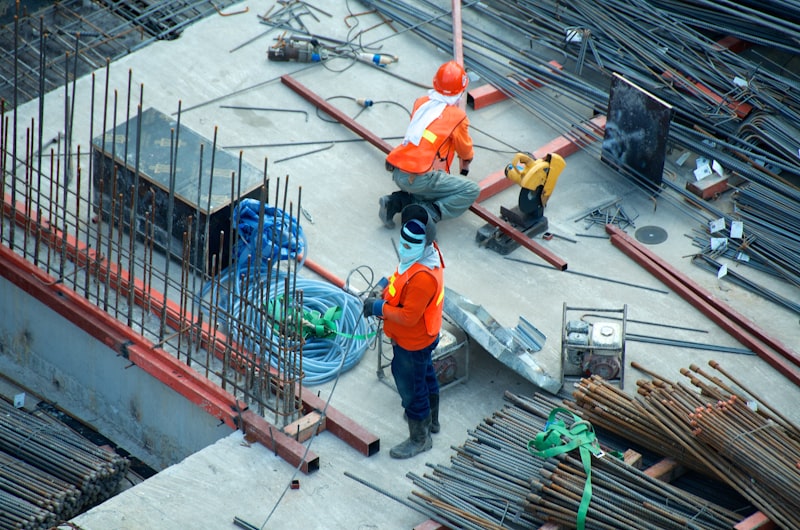
Adding value through renovation is the foundation of the BRRRR strategy — every dollar of forced appreciation becomes equity you can extract.
What Is the BRRRR Strategy and How Does It Work with DSCR Loans?
BRRRR stands for Buy, Rehab, Rent, Refinance, Repeat. It's a systematic method for growing a rental portfolio using the same pool of capital over and over. Here's the cycle:
Buy a below-market property — something that needs work but sits in a solid rental market. You might pay $180,000 for a property worth $250,000 in renovated condition.
Rehab the property. Spend $40,000 on a kitchen remodel, updated bathrooms, new flooring, and fresh paint. Your total investment is now $220,000 ($180,000 purchase + $40,000 rehab).
Rent the property at market rates. The renovated property rents for $2,200/month in its improved condition.
Refinance with a DSCR cash-out loan. After 6 months of ownership, the property appraises at $300,000. At 75% LTV, your new loan is $225,000. Since you invested $220,000 total, you're pulling out $225,000 minus closing costs — essentially recovering all of your original capital.
Repeat. Take that recovered capital and do the exact same thing with the next property. You now own a $300,000 rental producing $2,200/month in rent, and you've got your investment dollars back to deploy again.
The DSCR loan is what makes this work for investors who don't have pristine W-2 income. A conventional cash-out refinance would require two years of tax returns, and most active investors show lower taxable income due to depreciation and write-offs. The DSCR route skips all of that — the property's income is the only qualification metric.
Extract Your Equity and Grow Your Portfolio
Our DSCR cash-out refinance programs go up to 75% LTV with no tax returns required. Pull equity from the rentals you already own and put that capital to work on your next deal.
Seasoning Requirements: How Long Do You Have to Wait?
Most DSCR lenders require 6 months of ownership before they'll allow a cash-out refinance. This is called the "seasoning period." You need to have been on title for at least 6 months from the date of purchase to the date of your new loan application.
Here's the important part for BRRRR investors: after that 6-month seasoning period, lenders will refinance based on the current appraised value, not the original purchase price. So if you bought a property for $180,000, spent $40,000 on rehab, and it now appraises at $300,000, your cash-out is based on the $300,000 figure. The difference between your purchase price and the appraised value is your forced appreciation — and you can extract it.
Some lenders have shorter seasoning periods (as low as 3 months) or longer ones (12 months). A few programs allow "delayed financing" with no seasoning at all if you purchased with cash, though these typically limit you to recovering only the documented acquisition cost, not the full appraised value. Ask your loan officer about specific seasoning options for your situation.
DSCR Cash-Out vs. Conventional Cash-Out Refinance
Conventional cash-out refinances through Fannie Mae or Freddie Mac exist, but they come with serious limitations for investors:
Income documentation: Conventional loans require two years of W-2s and tax returns. If you're self-employed or show low taxable income from depreciation, you may not qualify at all. DSCR loans skip income verification entirely.
Property limits: Fannie Mae caps financed properties at 10 per borrower. If you already own 10+ rentals, you can't get another conventional loan. DSCR lenders don't impose property count limits.
Entity ownership: Conventional loans won't close in an LLC. DSCR loans will. For investors who want liability protection through entity structuring, this is a significant advantage.
LTV: Conventional cash-out refinances on investment properties max out at 75% LTV. DSCR programs are comparable at 70-75% LTV for cash-out transactions.
Rates: DSCR loans carry slightly higher rates than conventional — typically 1-2% above conventional investment property rates. That's the tradeoff for no income verification and no property count limits. For most investors building a portfolio, the access to capital more than offsets the rate difference.
If you own fewer than 4 rentals and have clean W-2 income, conventional might save you money on rate. For everyone else — self-employed investors, portfolio builders, LLC owners — the 30-year fixed DSCR loan is usually the better path.
Rate and Term Refinance vs. Cash-Out: Which Do You Need?
These two refinance types serve completely different purposes:
A rate-and-term refinance replaces your current mortgage with a new one — typically to get a lower interest rate, switch from adjustable to fixed, or change the loan term. No cash comes out. Your loan balance stays roughly the same (minus any paydown). LTV limits are usually higher (up to 80%) and rates are lower because the lender's risk is lower.
A cash-out refinance increases your loan balance and gives you the difference in cash. It's a capital recycling tool — you're converting illiquid equity into deployable cash. Rates are slightly higher and LTV caps are slightly lower (70-75%).
Use rate-and-term when your goal is to reduce your monthly payment or lock in a better rate on an existing property. Use cash-out when your goal is to extract equity and redeploy it into new acquisitions or renovations. If you're running the BRRRR strategy, cash-out is the engine that keeps the cycle running.
DSCR Loan Calculator
Run the numbers before you apply. Enter your rental income and proposed loan terms to see if your property hits the DSCR threshold.
Calculate Your DSCR →How Do You Structure a BRRRR Deal from Start to Finish?
Let's walk through a complete BRRRR deal with actual numbers so you can see how the capital recycling works.
The target: A 3-bedroom single-family rental listed at $160,000. It needs a new kitchen, updated bathroom, flooring, and paint. Comparable renovated properties in the neighborhood rent for $1,800/month and sell for $250,000.
The buy: You purchase at $160,000. You use a short-term bridge loan or hard money loan at 85% LTV ($136,000), bringing $24,000 cash to close plus $4,000 in closing costs. Out of pocket so far: $28,000.
The rehab: You spend $35,000 on renovations — $15,000 for the kitchen, $8,000 for the bathroom, $7,000 for flooring, and $5,000 for paint, fixtures, and landscaping. Total invested: $63,000 cash ($28,000 acquisition + $35,000 rehab).
The rent: You list the renovated property and secure a tenant at $1,850/month on a 12-month lease.
The refinance: After 6 months, you order a DSCR cash-out refinance. The property appraises at $255,000. At 75% LTV, your new residential rental property loan is $191,250. The new loan pays off your bridge loan balance (roughly $136,000) and closing costs ($5,000), leaving you with approximately $50,000 in cash back.
The DSCR check: Your monthly mortgage payment on the new $191,250 loan at 7.5% over 30 years is approximately $1,338. Add $250/month for taxes and $100/month for insurance: total monthly payment is $1,688. Your rent is $1,850. DSCR = $1,850 / $1,688 = 1.10x. That clears the 1.0x minimum with room to spare.
The result: You invested $63,000 total and got $50,000 back. Your net cash still in the deal is $13,000 — and you own a $255,000 property producing $1,850/month in rent with a positive cash flow of $162/month. The $50,000 you pulled out is now the down payment for your next BRRRR property.
Investment Property Mortgage Calculator
Model your cash-out refinance payment and see how the new loan amount affects your monthly cash flow and DSCR ratio.
Run the Numbers →Common Mistakes with Cash-Out Refinancing
Over-leveraging the property. Just because you can pull 75% LTV doesn't mean you should. Run the numbers at the new payment amount and make sure the property still cash-flows after the refinance. A property that was making $400/month in cash flow might break even or go negative if you max out the cash-out.
Ignoring the new interest rate. If you originally financed at 5.5% and rates are now 7.5%, your cash-out refinance means replacing a cheap loan with an expensive one. Calculate the difference in monthly payment and decide if the extracted cash justifies the higher carrying cost.
Underestimating rehab costs. BRRRR investors who go over budget on renovations end up with less capital recovery on the refinance. Build a 15-20% contingency buffer into every rehab budget. If your contractor quotes $35,000, plan for $42,000.
Not checking the DSCR before applying. The worst outcome is paying for an appraisal ($400-$600) and then failing the DSCR requirement. Run the DSCR calculation yourself before you submit an application. Gross rent divided by total mortgage payment (PITIA) needs to hit at least 1.0x.
Skipping the seasoning period math. If you close on a purchase in January, your 6-month seasoning doesn't end until July. Some investors rush to apply at 5 months and get denied. Mark the 6-month date on your calendar and don't apply early.
When Does a Cash-Out Refinance NOT Make Sense?
Cash-out refinancing isn't always the right move. Skip it if:
The property won't cash-flow after the refinance. If your new mortgage payment will be $2,000 and the property rents for $1,900, you'll be negative $100/month. That's a DSCR of 0.95x — below most program minimums and a money loser even if you do qualify.
You don't have a clear use for the cash. Pulling equity just to park it in a savings account doesn't make sense when you're paying 7-8% interest on the new loan balance. Have a specific deal or acquisition target before you refinance.
The appraisal won't support your target LTV. If you bought at market value and haven't added value through renovation or appreciation, there may not be enough equity to justify a cash-out. You'll pay closing costs (2-3% of the new loan) and end up with very little cash after expenses.
You plan to sell within 12-18 months. Cash-out refinance closing costs take time to recoup. If you're planning to sell the property soon, those costs eat into your profit. A blanket loan across multiple properties or a bridge loan might be a better short-term option.
Your existing rate is significantly lower. Giving up a 4.5% rate for a 7.5% cash-out loan increases your monthly payment by hundreds of dollars. Sometimes it's cheaper to get a second mortgage or home equity line of credit instead of replacing a low-rate first mortgage.
Cash-Out Refinance Readiness Checklist
- Property owned for at least 6 months (seasoning requirement met)
- Current appraised value supports 75% LTV with meaningful cash-out
- Rental income covers new mortgage payment at 1.0x DSCR or higher
- Credit score at or above 680 (higher score = better rate and LTV)
- Active lease in place with documented rental income
- Property insurance current and adequate for the new loan amount
- Clear plan for the extracted cash (next acquisition, rehab, or debt paydown)
- Verified the property still cash-flows positively at the higher loan balance
Ready to Tap Your Equity?
Get a DSCR cash-out refinance quote in minutes. No tax returns, no W-2s, no income verification. We'll tell you exactly how much cash you can pull from your rentals and what the new payment looks like.